
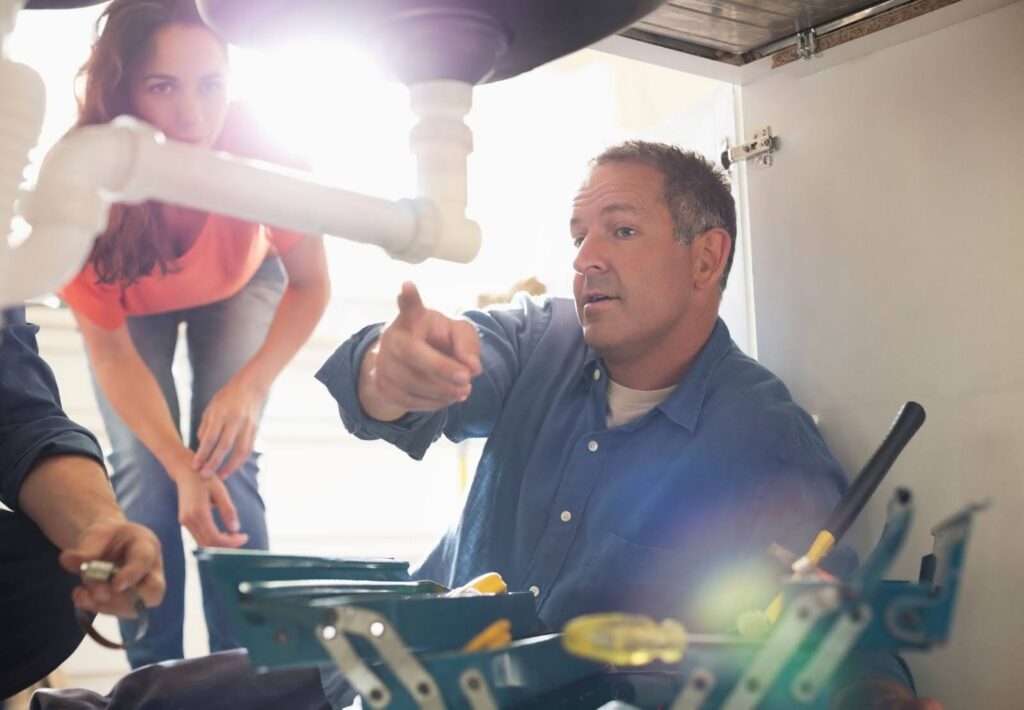
Yes, That Might Be a $12 Part
You’ve probably had the thought.
A plumber replaces a relatively small part, finishes the repair faster than you expected, and hands you the bill.
Then you look up the part online.
Twelve dollars.
So why did the plumbing repair cost so much more?
It’s a fair question.
The answer is that you didn’t hire a plumber to sell you a part. You hired someone to determine which part you needed, understand why it failed, install it correctly, make sure the surrounding system is working as it should, and stand behind the repair when the job is finished.
At Saffer Total Home, we believe homeowners deserve to understand what they’re paying for.
Because the value of professional plumbing isn’t measured by the price of the part or the number of minutes a technician spends in your home.
It’s measured by whether the right problem gets solved.
How Much Does a Plumber Cost? Start With What’s Actually Wrong
One of the hardest questions to answer without seeing the problem is also one of the most common:
How much does a plumber cost?
Two plumbing problems can look remarkably similar from the outside and require completely different solutions.
We once investigated a constant leak in a Rogers Forge row house that initially appeared to be coming from a pressurized water line.
It wasn’t.
After investigating the plumbing, we discovered a cracked cast-iron waste pipe. A toilet was also continuously running a small amount of water through that pipe.
One visible symptom. Two underlying problems.
That’s where experience becomes valuable.
Experience helps you know where to look.
It also helps you know when to keep looking.
A plumber may know exactly how to replace the component that appears to be causing the problem. The greater value is recognizing when replacing it won’t solve anything.
Sometimes Expertise Saves You From the Expensive Repair
Professional diagnosis doesn’t always lead to a larger repair.
Sometimes it does exactly the opposite.
We recently visited a home where the owners believed groundwater was entering their basement. They were considering spending somewhere between $10,000 and $20,000 on French drains and waterproofing work to solve the problem.
We investigated.
The source of the water wasn’t groundwater at all.
It was a small leak in a condensate line.
A relatively simple repair prevented the homeowners from spending thousands of dollars on a project they didn’t need.
That’s one of the reasons we place so much value on diagnosis.
The goal isn’t to find the most expensive way to solve a plumbing problem.
It’s to correctly identify the problem so you spend money on the solution your home actually needs.
How Much Do Plumbers Charge Per Hour? Time Doesn’t Tell the Whole Story
There’s another reason plumbing prices can sometimes be surprising.
Experience often makes difficult work look easy.
If an apprentice needs two hours to correctly install a garbage disposal and a master plumber can do the same work in 45 minutes, charging strictly for time would make the more experienced plumber appear less valuable precisely because they’re more efficient.
You aren’t receiving less simply because the experienced plumber needed less time.
You’re benefiting from everything that allowed them to need less time.
Those 45 minutes are backed by years of training, repetition, mistakes avoided, unusual problems encountered, and lessons learned on hundreds or thousands of previous service calls.
A skilled plumber isn’t simply working faster.
They’re drawing on experience that allows them to recognize what they’re looking at, anticipate problems, and complete the work correctly and efficiently.
That’s why asking how much plumbers charge per hour doesn’t always tell you what you really want to know.
The better question is what you’re receiving for the money you’re spending.
You’re Paying for More Than the Plumber at Your Door
When a Saffer truck pulls into your driveway, the technician who walks into your home isn’t working alone.
Behind that person is an entire team.
Our trucks are professionally stocked and inventoried so our technicians arrive with the parts and equipment they’re likely to need. Behind those trucks are people maintaining inventory, scheduling service, supporting technicians, maintaining records, and helping make sure the right resources reach the right home.
We maintain service histories that can give our technicians useful information about previous work and equipment in your home.
We also try to match technicians to calls based on their particular skills and the problem you’ve described.
And when one of our plumbers encounters something unusual, there are experienced people available to answer questions, offer another perspective, or provide another pair of hands.
In other words, you may see one technician at your door.
But that technician represents an entire team working behind the scenes.
The Right Tools Can Mean Less Guesswork
Some plumbing problems can be diagnosed with experience, careful observation, and a basic set of tools.
Others can’t.
Experience tells a plumber what to look for. The right equipment can help confirm what’s actually there.
Cameras allow us to investigate piping that isn’t otherwise visible, while other diagnostic tools help us gather information about problems hidden throughout the home. Together, experience and technology allow us to make better-informed decisions before beginning a repair.
The value isn’t simply that the equipment is expensive.
The value is what the right equipment can prevent.
Guesswork.
Unnecessary repairs.
Unnecessary demolition.
And money spent solving the wrong problem.
Professional Plumbing Doesn’t Stop With a License
Becoming a skilled plumber takes time.
Staying one takes continued effort.
Codes change. Products change. Equipment changes. Homes change.
Saffer conducts ongoing training on code requirements, products, services, and the situations our technicians encounter in the field. Training takes place in the classroom and on the job, with plumbers and their leaders continually sharing what they’re learning.
Licensing matters.
So do insurance, permitting, code compliance, and professional standards.
But those things shouldn’t be viewed simply as business expenses added to the price of a repair.
They’re part of the structure that protects the homeowner.
Plumbing is connected to your drinking water, sanitation, gas systems, appliances, and the structure of your home. Work hidden behind a wall may remain there for decades.
Doing it correctly matters long after the invoice is paid.
Professional Service Requires Professional People
There’s another part of professional plumbing that homeowners may never see reflected in the finished repair.
The people doing the work have chosen a demanding skilled trade.
Plumbing can mean tight spaces, heavy equipment, difficult conditions, human waste, long days, and problems that don’t arrive with an instruction manual.
That means treating skilled tradespeople like the professionals they are.
Training matters. So do benefits, support, opportunities to grow, and a workplace where talented people can build a career.
When we send someone into your home, we want you to feel confident not only in their ability to perform the work, but in the person we’ve trusted to represent Saffer.
The longer skilled professionals stay in the trade, the more experience they accumulate, the more unusual problems they encounter, and the more knowledge they have to bring to the next homeowner’s door.
You should be able to expect a professional.
A Cheap Plumber Can Get Expensive Quickly
Price matters.
We would never tell a homeowner otherwise.
But the lowest plumbing estimate isn’t necessarily the repair that ultimately costs the least.
We’ve been called after homeowners hired someone else to complete work that later had to be corrected. Sometimes the original repair didn’t solve the underlying problem. Sometimes work wasn’t completed properly. In more extensive situations, we’ve encountered projects where work had to be traced, permitted, corrected, or redone.
At that point, the homeowner isn’t saving money.
They’re paying twice.
Plumbing doesn’t exist in isolation. When something goes wrong, the effects can reach flooring, cabinetry, drywall, appliances, and other parts of the home. And when work is hidden behind a wall, a problem may go unnoticed for years.
So yes, compare prices.
Just make sure you’re also comparing the quality, scope, and accountability behind the work.
Comparing Plumbing Estimates? Compare the Work, Not Just the Numbers
Two plumbing estimates with different prices aren’t necessarily estimates for the same work.
Consider something as familiar as replacing a garbage disposal.
One approach is to remove the old disposal and install another one.
But that’s not necessarily where the plumbing conversation should end.
What condition is the waste piping in?
Is it properly vented?
Can the existing system support the new disposal?
Is there another condition contributing to the problem?
Those questions can change the scope of a repair.
That’s why Saffer spends time explaining what we’re recommending, why we’re recommending it, and what each option includes.
We make recommendations based on our experience, but we want the homeowner in the driver’s seat.
Our job is to give you enough information to make an informed decision about your home.
We’re here to service, not simply to sell.
The Most Expensive Option Isn’t Automatically the Best One
Professional plumbing isn’t about finding the biggest possible solution to every problem.
Sometimes a homeowner needs a comprehensive repair.
Sometimes there are several legitimate ways to approach the same problem.
And sometimes the right answer is the smaller repair.
That’s why we build options when appropriate and explain the tradeoffs between them.
What solves the immediate problem?
What addresses the underlying cause?
What is likely to provide better long-term value?
What makes sense based on the age and condition of the surrounding system?
What matters most to the homeowner?
Those conversations are part of the service.
Because we’re not the ones living in your home.
You are.
Your Home Is Too Important to Manage One Emergency at a Time
Your home is a serious investment.
Plumbing, heating, cooling, electrical systems, appliances, and other equipment all play a role in protecting that investment and making the home comfortable to live in.
Waiting until something breaks is one way to manage those systems.
We believe there’s a better way.
Understanding the condition and age of your equipment gives you opportunities to maintain what you have, identify developing concerns, and plan for eventual replacements before you’re forced to make decisions unexpectedly.
That’s also the philosophy behind the Safer With Saffer Club and our Stewardship Review.
The goal isn’t to walk through your home looking for things to sell you.
It’s to understand the home as a whole, help you know what deserves attention, and give you time to plan for what may be coming next.
So, Why Are Plumbers So Expensive?
Sometimes a professional plumbing repair looks simple because you’re watching someone who knows exactly what they’re doing.
You’re not just paying for the part.
You’re paying for the experience that identified the right part.
The training that taught someone how to install it.
The stocked truck that brought it to your home.
The people supporting the technician behind the scenes.
The licensing, insurance, and professional standards surrounding the work.
The warranty that remains after the technician leaves.
And, perhaps most importantly, the judgment to recognize when the problem isn’t what it first appears to be.
At Saffer Total Home, our name is on the truck.
That matters to us.
When we send a technician into your home, that work is backed by years of experience, a comprehensive warranty, and our trust in the people representing our family and our company.
When it comes to the cost question, there’s one simple thing to remember:
Cheap plumbing is very expensive.
The goal isn’t to find the most expensive plumber.
It’s to find the plumber who helps you spend your money on the right solution the first time.
Contact Saffer Total Home to schedule plumbing service with a plumber in Baltimore who takes the time to understand the problem before recommending the solution.